


How To Clean Stainless Steel Sink?
Views: 0 Author: Site Editor Publish Time: 2026-04-29 Origin: Site


The stainless steel sink acts as the primary workstation in most modern culinary spaces. It faces relentless daily abuse from boiling water, abrasive food debris, and heavy cookware. While renowned for its durability, this high-use asset requires highly precise maintenance. Poor cleaning methods ruin the visual appeal quickly. Worse, they can permanently compromise the metal's structural integrity. Harsh chemicals strip away the protective passive layer. Applying abrasive tools leads to irreversible oxidation, localized pitting, and dullness. This guide provides a comprehensive framework to safeguard your investment. You will learn how to evaluate safe cleaning agents correctly. We will explore specific finish requirements to prevent accidental damage. Finally, you will discover how to establish an effective maintenance protocol to keep your Kitchen Sink pristine for decades.
Key Takeaways
Identify the Grain: All physical agitation must align with the directional grain of the stainless steel to prevent micro-scratching.
Drying is Mandatory: Complete moisture removal post-cleaning is the only definitive way to prevent mineral deposits and water spots.
Finish Dictates Chemistry: Mirror, Durinox, and Colored (PVD) finishes require fundamentally different cleaning protocols than standard brushed steel.
Hidden Hazards: Environmental factors like rubber sink mats and off-gassing from under-sink chemicals are primary drivers of localized oxidation.
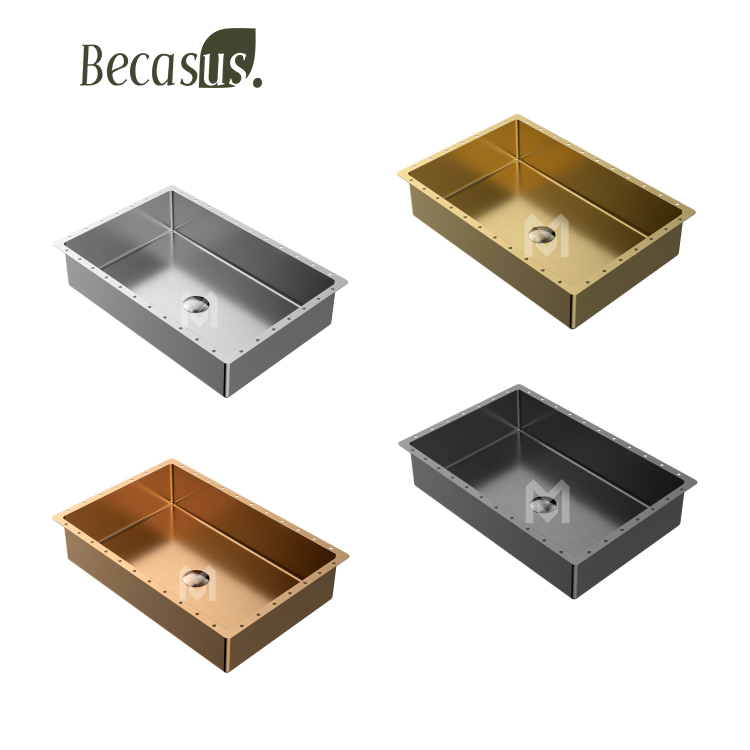
Assessing Your Kitchen Sink: Finish Types and Success Criteria
Standardized cleaning advice often fails entirely. It ignores critical material variations across different manufacturing processes. Applying a universal cleaning protocol can permanently strip specialized coatings. You might also irreparably scratch high-gloss surfaces. Before selecting a cleaning method, you must identify your specific finish.
Brushed/Satin Finishes
This represents the industry standard for most kitchens. You can easily identify brushed finishes by their visible directional lines. They offer moderate forgiveness regarding daily wear and tear. Brushed surfaces tolerate mild micro-abrasives well. However, they demand strict adherence to grain-aligned wiping. Scrubbing across the grain creates microscopic cross-hatching. This traps dirt and ruins the uniform sheen.
Mirror and High-Gloss Finishes
These highly reflective surfaces look stunning but remain exceptionally vulnerable. Your success criteria here mandate a strict zero-abrasive policy. Never use baking soda pastes or commercial scouring powders on them. You must rely solely on gentle liquid detergents. Always apply these detergents using premium microfiber cloths. Even standard paper towels can leave micro-scratches on high-gloss steel.
Colored/PVD and Proprietary Hardened Finishes
Modern luxury kitchens often feature Physical Vapor Deposition (PVD) colored surfaces. Some brands also offer proprietary matte finishes like Durinox. These boast extreme physical hardness. They resist scratches better than standard brushed steel. However, they exhibit intense chemical sensitivity. Harsh agents containing chlorine or ammonia cause irreversible fading. They can permanently alter the surface color.
Shortlisting Logic
Always verify the manufacturer guidelines first. Visually inspect the finish closely. Check for directional lines, reflectivity, and coloration. Use this visual data to select your cleaning approach safely.
Finish Type | Visual Identifier | Approved Cleaning Agents | Strictly Avoid |
|---|---|---|---|
Brushed / Satin | Visible horizontal lines | Baking soda, mild acids, dish soap | Cross-grain scrubbing, steel wool |
Mirror / High-Gloss | Highly reflective surface | Mild dish soap, microfiber cloths | All abrasives, paper towels, powders |
Colored / PVD | Black, gold, or copper tones | pH-neutral soaps, warm water | Chlorine bleach, ammonia, harsh acids |
Solution Evaluation: Commercial Compounds vs. Chemical-Free Alternatives
Selecting the right cleaning agent determines the lifespan of your sink. The market offers dozens of options. We evaluate them based on efficacy, risk profile, and material safety.
Commercial Acidic Powders (e.g., Oxalic Acid Formulas)
Products utilizing oxalic acid provide heavy-duty restoration capabilities.
Pros: They deliver exceptional efficacy against heavy organic stains. They excel at breaking down transfer rust.
Risks: High acidity levels require protective gloves during application. Extended dwell times can literally etch the steel. They are not scalable for delicate or colored finishes.
The Micro-Abrasive DIY Approach (Baking Soda + Dish Soap)
This household combination remains the most reliable method for standard maintenance.
Pros: It creates a highly effective, low-risk gritty paste. The natural alkalinity neutralizes foul drain odors. It performs deep cleaning without compromising the steel's passive protective coating.
TCO/ROI: This method offers the lowest ongoing total cost of ownership. It utilizes existing household inventory completely.
Acidic Household Agents (White Vinegar / Lemon)
Acids handle mineral buildup effectively but demand careful monitoring.
Pros: These liquids provide targeted resolution for mineral deposits. They break down hard water limescale via mild acid interactions.
Risks: Prolonged soaking introduces severe corrosion risks. Never leave raw acids sitting in the basin unmonitored. Limit exposure to less than 30 minutes.
Solution Type | Primary Use Case | Dwell Time Limit | Safety Gear Needed |
|---|---|---|---|
Oxalic Acid Powders | Rust, severe stains, heavy restoration | 1-2 minutes maximum | Rubber gloves recommended |
Baking Soda Paste | Daily grime, odors, grease | Safe for extended dwell | None required |
Vinegar / Lemon | Hard water spots, calcium buildup | 15-30 minutes maximum | None required |
The Six-Step Implementation Framework for Deep Cleaning
Execution matters just as much as chemical selection. Follow this structured framework to clean your sink deeply and safely. This process restores brilliance while protecting the underlying metal structure.
Clear and Prep: Begin by removing all physical hardware. Take out bottom grids, protective mats, and drain strainers. You need unobstructed access to the entire basin. Rinse the empty surface using warm water to remove loose debris.
Agent Application: Choose your cleaning compound based on the finish assessment. Distribute the powder or paste evenly across the damp surface. Ensure full coverage over the basin floor and side walls.
Mechanical Scrubbing: Identify the specific grain direction. Apply firm, linear pressure. Use a non-scratch sponge or a clean microfiber cloth. You must move parallel to the grain lines. Never use circular motions. Circular rubbing creates permanent swirl marks.
Thermal Rinse: Utilize warm water to flush out all particulate matter thoroughly. Pay special attention to the tight radii of the corners. Rinse the drain rim meticulously. Residual cleaning agents trap dirt over time.
The Critical Drying Phase: Immediately buff the entire surface dry using a clean cloth. Implementation Reality: Evaporating water leaves trace minerals behind. Air drying guarantees water spots. Manual drying is the only absolute prevention strategy.
Optional Barrier Protection: Apply a microscopic layer of food-safe mineral oil or linseed oil. Buff the oil deeply into the grain. This creates a temporary, hydrophobic shield. It effectively repels water droplets and prevents ugly fingerprints.

Mitigating Long-Term Maintenance Risks and Structural Hazards
Daily habits affect sink longevity more than weekly cleaning routines. Several common kitchen practices introduce severe structural hazards. Understanding these hidden dangers prevents premature deterioration.
The Rubber Mat Fallacy
Many homeowners place solid rubber dish mats inside the basin. They mistakenly believe this protects the metal from scratches. In reality, leaving rubber mats inside traps moisture constantly. Food particles accumulate underneath them easily. This creates dangerous bacterial reservoirs. More importantly, stagnant water deprives the steel of oxygen. This causes localized pitting and oxidation. Use elevated stainless steel bottom grids instead. Grids allow proper water drainage and airflow.
Thermal Shock Prevention
Draining pasta or potatoes introduces sudden extreme heat to the metal. Pouring boiling water directly into the drain causes rapid thermal expansion. This expansion can permanently warp the metal basin. It also melts PVC pipe seals below the drain. Best Practice: Always run the cold water tap simultaneously when draining boiling liquids. The mixing water temperatures neutralize the thermal shock completely.
Under-Sink Chemical Off-Gassing
Most households store cleaning supplies directly beneath the kitchen sink. Storing open or loosely capped containers of chlorine bleach poses huge risks. Muriatic toilet cleaners also present severe dangers. These harsh chemicals release continuous corrosive emissions. This invisible off-gassing attacks the sink from the underside. It causes severe rust and pitting on the unpolished bottom surface. Store caustic chemicals in well-ventilated utility rooms instead.
Tool Selection Strictures
Your choice of scrubbing tools dictates the surface integrity. Categorically ban steel wool from your kitchen. Do not use carbon steel brushes or harsh scouring pads. These aggressive tools scratch the protective passive layer deeply. Worse, they embed foreign iron particles directly into the stainless surface. These microscopic iron shards will inevitably rust upon contact with water. Only use nylon brushes, soft sponges, or microfiber cloths.
Troubleshooting Stubborn Defects: Hard Water, Rust, and Scratches
Even perfectly maintained sinks occasionally develop stubborn visual defects. You must address these issues chemically rather than relying on brute physical force.
Mineral Deposit Remediation
Homes utilizing hard water struggle with constant limescale buildup. Scrubbing limescale physically rarely works. Instead, rely on mild acid breakdown. Soak paper towels in pure white vinegar. Apply these soaked towels directly to the affected area like a mask. Limit exposure to 15-30 minutes. Remove the towels, rinse the area completely, and dry it.
Diagnosing Rust Issues
Consumers panic when they see orange spots on their sink. Understand this crucial metallurgical fact: high-quality stainless steel rarely rusts natively. Most orange patches are actually "transfer rust." They occur when wet cast-iron pans sit in the basin overnight. Tin cans also leave rust rings behind. Remove transfer rust via localized application of a mild micro-abrasive. Do not gouge the metal trying to scrape it away.
Scratch Management and the Passive Layer
New sink owners frequently experience extreme anxiety regarding surface scratches. Minor scratches remain inevitable during normal kitchen operations. Material science explains why you should not worry. Stainless steel relies on an oxygen-reactive "passive coating" made of chromium oxide. When you scratch the sink, oxygen instantly reacts with the exposed chromium. It rebuilds the protective barrier immediately. Over time, these minor scratches oxidize slightly. They blend naturally into a uniform, visually pleasing patina. Accept early scratches as part of the normal break-in period.
Conclusion
Preserving the beauty and integrity of your sink requires intentional daily habits. You must respect the directional grain during every scrub. You must dry the basin meticulously after heavy use to defeat water spots. Most importantly, you must avoid harsh chemicals and abrasive tools entirely. Establish a tiered maintenance schedule to guarantee long-term success. Practice daily rinsing and manual drying. Perform weekly micro-abrasive deep cleans using baking soda. Execute monthly barrier polishing using mineral oil. Following this structured protocol maximizes the lifespan and aesthetic return on investment of your kitchen workstation.
FAQ
Q: Can I use bleach to sanitize my stainless steel kitchen sink?
A: No. You should never apply chlorine bleach to stainless steel. Bleach severely strips the metal's protective passive layer. It induces aggressive chloride pitting and causes permanent discoloration. To sanitize effectively and safely, use boiling water (mixed with running cold tap water) or a mild antibacterial dish detergent instead.
Q: How do I find the grain on my sink?
A: Shine a bright flashlight directly onto the dry basin floor. Look closely at the metal surface. You will see faint, parallel brush lines running across it. Alternatively, lightly drag your fingernail horizontally, then vertically. The direction that feels completely smooth dictates the grain direction.
Q: Why is my brand-new sink scratching so easily?
A: All pristine stainless steel shows initial scratches prominently because the surface lacks a wear pattern. This represents a normal break-in period. Continuous daily use introduces thousands of micro-scratches. Over several months, these scratches blend together naturally. They develop into a uniform, highly forgiving patina that hides future wear.
Q: Are DIY baking soda and vinegar mixes actually safe to leave in the sink overnight?
A: No. While baking soda is perfectly safe for long durations, vinegar contains acetic acid. Prolonged soaking introduces unnecessary corrosion risks to the metal surface. Extended chemical dwell times can degrade the protective chromium oxide layer. Always limit acid exposure to a maximum of 30 minutes before rinsing.


