


What Are The Types Of Vessel Basins?
Views: 0 Author: Site Editor Publish Time: 2026-07-22 Origin: Site


Installing a vessel basin instantly transforms any standard bathroom from purely utilitarian to an architectural showcase. Designers often rely on these prominent fixtures to create striking, elevated focal points. They immediately draw the eye and set the room's entire tone. However, selecting the right unit involves much more than simply picking an attractive design.
It is fundamentally an engineering choice. Buyers who ignore the technical aspects often face unexpected challenges down the road. Incorrect selections frequently result in ergonomic discomfort, chronic water splashing, and high-friction daily maintenance routines.
We created this comprehensive guide to help you navigate these exact pitfalls. We will provide an evidence-based framework for evaluating different basin types, core materials, and crucial technical requirements. You will learn how to balance shape dynamics with strict installation math. Ultimately, this guide ensures you make a confident, highly functional purchase.
Key Takeaways
Material dictates maintenance: Ceramic and tempered glass offer baseline functionality, while natural stone and copper require structured maintenance and sealing.
Shape impacts ergonomics: Slope and depth determine splash-back risk and daily usability; rectangular shapes require more frequent corner cleaning than rounded profiles.
Installation math is mandatory: A vessel basin requires modifying standard vanity heights (lowering the counter) and demands specific tall-reach or wall-mounted faucets.
Drain compatibility: Most true vessel basins do not have overflow holes, requiring specific non-overflow pop-up drains to comply with building standards.
Defining the Vessel Basin vs. Above-Counter Alternatives
Understanding bathroom sink terminology helps you communicate effectively with contractors and designers. Many people use the terms interchangeably. However, structural differences completely alter the installation process.
Pure Vessel Basins
A pure vessel basin sits entirely on top of the counter. The vanity deck acts as a solid table supporting the fixture. You expose the entire exterior profile of the bowl. This design requires maximum vertical clearance. You must pair it alongside specialized tall faucets or wall-mounted fixtures. It delivers the most dramatic architectural statement.
Drop-in / Self-Rimming vs. Vessel
Drop-in sinks represent a fundamentally different engineering approach. Installers cut a large hole into the vanity counter. They lower the bowl into this cutout. A structural lip rests on the counter edge to hold the sink in place. You only see the interior bowl and the rim. Drop-ins hide the structural plumbing and exterior profile. They utilize standard vanity heights and conventional faucet sizes.
Semi-Recessed Basins
Semi-recessed basins offer a clever hybrid solution. The bottom half drops into the vanity cabinet. The top half remains exposed above the counter level. We strongly recommend this option for specific scenarios. It works best for users who want the prominent vessel look but already possess standard-height vanities. They also serve households well when children frequently use the bathroom, as the overall rim height sits lower.
Evaluating Types of Vessel Basins by Material
Material selection goes beyond visual appeal. It directly dictates your daily cleaning routine and long-term durability. We categorize these materials by their physical properties and maintenance demands.
Ceramic, Porcelain, and Fireclay
These clay-based materials dominate the residential market. Manufacturers fire them at extreme temperatures to create a hardened, glassy surface.
Pros: They are entirely non-porous. The glaze highly resists scratching and fading. They feature broad compatibility regarding standard chemical cleaning agents.
Cons: The rigid structure lacks flexibility. They can chip or crack if you drop heavy, blunt objects directly onto them.
Best for: We recommend these for high-traffic bathrooms. They easily withstand rigorous daily family use. They suit buyers prioritizing a low-maintenance lifestyle.
Tempered Glass
Glass basins introduce light and transparency into a bathroom. Manufacturers treat them thermally to increase structural strength.
Pros: They create an illusion of expanded visual space. You will find highly customizable colors and embedded textures. The tempering process makes them structurally resilient against sudden thermal shock.
Cons: The transparent nature creates a high visibility of hard water spots. Soap scum easily shows on the surface. They require frequent, almost daily wiping to maintain clarity.
Best for: Use them in powder rooms. They shine in low-traffic guest bathrooms where aesthetics outweigh frequent usage.
Natural Stone (Marble, Granite, River Rock)
Stone brings raw, organic elements indoors. Artisans carve these basins directly from solid mineral blocks.
Pros: Every single basin remains entirely unique. They provide a luxury aesthetic with exceptionally high tactile value.
Cons: Natural stone is highly porous. It readily absorbs colored liquids and oils. You must commit to strict semi-annual sealing routines. They are also extremely heavy. You must install reinforced vanity tops to support the load safely.
Best for: Premium architectural remodels favor natural stone. Choose them only when you can accommodate specialized care and structural support.
Metals (Copper, Brass, Stainless Steel)
Metal basins introduce industrial or rustic warmth. Artisans often hand-hammer the surfaces to create textured profiles.
Pros: Copper and brass possess natural antimicrobial properties. They offer striking visual contrast against tile. Furthermore, metal basins remain practically unbreakable.
Cons: They develop a "living finish" known as a patina. Oxidation naturally alters the look over time. They are also prone to localized denting upon heavy impact.
Best for: Rustic, farmhouse, or industrial design schemes. They fit perfectly where designers actively desire evolving, aged finishes.
Composite / Resin / Concrete
Engineered materials mix natural aggregates with specialized binding agents. They allow for hyper-modern shapes.
Pros: They feature seamless, monolithic structures. You generally find them in contemporary matte finishes. They are highly durable and offer customizable, sharp geometries.
Cons: Concrete remains inherently porous and requires regular sealing. Resin surfaces can scratch easily if you apply abrasive scrubbing cleaners.
Best for: Ultra-modern, minimalist designs requiring sharp angles and muted, matte color palettes.
Material Comparison Chart
Material Type | Durability | Maintenance Level | Ideal Usage Scenario |
|---|---|---|---|
Ceramic / Porcelain | High | Low | High-traffic family bathrooms |
Tempered Glass | Medium | High | Powder rooms and guest baths |
Natural Stone | Very High | High (Needs Sealing) | Luxury master bathrooms |
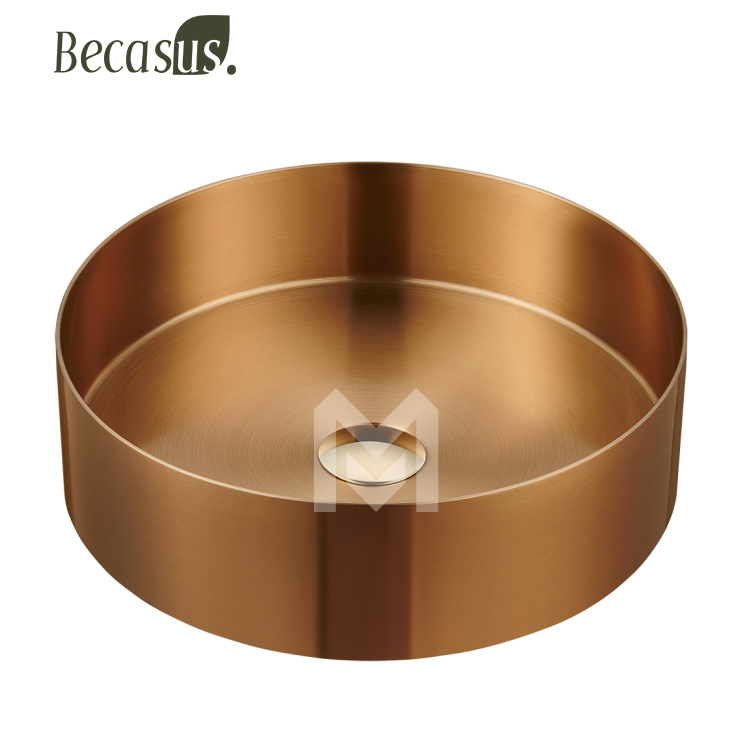
Metals (Copper) | High | Medium (Living Finish) | Rustic or industrial designs |
Resin / Concrete | High | Medium | Minimalist contemporary spaces |
Categorizing by Shape and Water Flow Dynamics
The interior geometry of your basin determines how water behaves. Faucet streams carry kinetic energy. When water hits a surface, shape dictates whether it drains smoothly or violently splashes back.
Round and Oval Profiles
These shapes represent the industry standard for a good reason. They utilize fluid dynamics efficiently.
Evaluation: Smooth interior curves facilitate natural, rapid water drainage. Gravity easily pulls debris toward the center drain. Furthermore, curved interiors are the easiest to wipe down daily. A round footprint generally frees up valuable counter space on smaller vanity decks.
Square and Rectangular Profiles
Geometric designs align perfectly with modern architectural trends. They offer crisp lines and structured symmetry.
Evaluation: A rectangular vessel basin delivers a highly contemporary, sharp aesthetic.
Risk: You must watch out for zero-radius corners. These strict 90-degree interior angles easily trap soap residue and toothpaste. You cannot simply wipe them; they require active brushing. Additionally, perfectly flat bottoms drastically increase the risk of slow, pooling drainage.
Asymmetrical and Sculptural Profiles
Designers sometimes treat the basin as an abstract piece of functional art. These shapes defy standard geometry.
Evaluation: They function purely as striking statement pieces. They capture attention immediately.
Risk: Irregular lips make faucet pairing extremely difficult. You must calculate the exact water trajectory. Splashing is highly probable if the water stream does not hit the optimal drain slope. We strongly recommend testing the water pressure alongside the specific sculptural shape before finalizing the installation.
Implementation Realities: Sizing, Faucets, and Vanity Heights
The biggest failures in bathroom renovations occur during installation planning. A beautiful basin becomes useless if the user must painfully arch their back to wash their hands.
The Vanity Height Equation
Traditional bathroom vanity cabinets sit horizontally between 32 inches and 36 inches off the floor. This measurement accommodates traditional drop-in sinks. If you place a 5-inch or 6-inch tall basin on top of a 36-inch vanity, you ruin the room's ergonomics. The rim will sit too high for comfortable daily use.
Actionable rule: The combined height of the vanity deck plus the basin should equal roughly 36 inches. Therefore, if your basin measures 6 inches tall, you must source a vanity cabinet that stands approximately 30 inches high.
Faucet Pairing and Reach
Standard faucets will not clear the rim of an above-counter bowl. You must purchase specialized hardware.
Vessel/Tall Faucets: These deck-mounted fixtures stand significantly taller. The spout must clear the basin rim by at least 1 to 2 inches. More importantly, the spout reach must extend directly over the drain. If the water hits the side slope instead of the drain, you will experience heavy splashing.
Wall-Mounted Faucets: These emerge directly from the vertical drywall behind the sink. They require opening the wall to adjust internal plumbing lines. However, they completely remove hardware from the vanity deck. This setup offers the absolute easiest counter cleanup possible.
Drainage and Overflow Compliance
Building codes and structural design dictate specific drainage requirements. Standard sinks feature an overflow hole near the top rim to prevent accidental flooding.
You must confirm whether your chosen basin features an overflow hole. Roughly 90% of them do not. Because the entire bowl exterior remains visible, manufacturers rarely design hidden overflow channels into them. Consequently, standard pop-up drains will leak if used. You must explicitly purchase a specialized "unthreaded non-overflow" pop-up drain to comply with plumbing standards.
Are Vessel Basins a Sound Long-Term Investment?
Many homeowners worry about the longevity of architectural trends. Remodeling requires significant capital. You want assurance regarding your hardware's future value and functionality.
Trend Longevity vs. Timelessness
Skeptics often label these basins as a "passing fad." We must separate the material from the mounting style. Highly stylized, brightly painted glass bowls indeed peak and wane in popularity. However, high-quality ceramic, porcelain, or natural stone vessels remain absolute architectural staples in luxury builds. High-end hotels and custom homes continually utilize them. The mounting format itself is timeless; the fleeting trend usually lies in exaggerated colors.
Daily Maintenance Truths
You must understand the physical realities of above-counter installations. We need to highlight the "pinch point." This describes the tight, acute angle where the curved basin exterior meets the flat vanity counter. This specific junction naturally accumulates dust, stray hairs, and splashed water. You cannot easily fit a sponge into this tight gap. It requires dedicated attention during weekly cleaning routines.
Resale Value Impact
Hardware choices influence potential home buyers. A well-executed installation absolutely enhances perceived value. Neutral colors and highly durable materials retain broad, mass-market appeal. Conversely, a highly stylized, brightly colored fixture may narrow buyer interest. Keep the primary shape elegant and the material premium to safeguard your real estate investment.
Shortlisting Logic: How to Choose Your Vessel Basin
We designed a sequential framework to streamline your purchasing decision. Follow these exact steps to eliminate incompatible options quickly.
Step 1: Measure the existing or planned vanity height. Subtract this number from 36 inches. This calculation determines the absolute maximum allowable basin height you can comfortably install.
Step 2: Define the specific bathroom's traffic level. Assign high-traffic family rooms to ceramic or porcelain. Assign low-traffic powder rooms to glass, stone, or copper.
Step 3: Select the faucet mounting style first. Decide between a deck-mounted tall faucet or a wall-mounted fixture before finalizing the basin shape. This ensures the spout reach aligns perfectly.
Step 4: Cross-check the basin's drain hole diameter. Ensure it matches standard plumbing fixtures. Verify you possess the correct non-overflow drain assembly.
Conclusion
A successful installation completely marries architectural vision with strict plumbing realities. The best choice always balances bold aesthetic impact alongside the physical constraints of the space. You must respect the math regarding vanity heights, spout reach, and fluid dynamics.
Before making a final purchase, finalize your exact vanity counter height. Select your specific faucet style and confirm its dimensions. Handling these technical measurements beforehand guarantees a seamless, beautiful, and highly functional bathroom upgrade.
FAQ
Q: Do vessel basins splash more than standard sinks?
A: Not inherently. Splashing is caused by mismatched faucet height and water pressure hitting a flat basin slope, not the basin type itself. If the water stream aligns directly with the center drain and the bowl features a gentle curve, splashing remains minimal.
Q: How do you clean the gap between a vessel basin and the counter?
A: Recommend leaving adequate spacing during installation and using microfiber wands or soft bristle brushes for daily maintenance. Wrapping a thin cloth around a flexible spatula also effectively clears out dust from the tight pinch point.
Q: Can I put a vessel basin on a standard vanity?
A: Yes, physically, but it is not ergonomically recommended unless the standard vanity is specifically built lower (e.g., 30 inches) to accommodate the basin's added height. Placing it on a standard 36-inch vanity creates an uncomfortably high washing experience.
Q: Do I need a special drain for a vessel basin?
A: Yes, typically a mounting ring for curved bottoms and a pop-up drain explicitly designed without an overflow mechanism. Using a standard drain on a non-overflow bowl will cause persistent water leaks underneath the counter.


