


Above Counter Vessel Sink Buying Guide For Bathroom Projects
Views: 0 Author: Site Editor Publish Time: 2026-07-01 Origin: Site


An above counter vessel sink instantly elevates bathroom aesthetics. They act as beautiful sculptural centerpieces. However, achieving this striking look requires more than just picking an attractive design. You must account for strict spatial planning and exact hardware compatibility to ensure daily usability.
A standard undermount sink sits beneath the counter. It hides the edges and integrates seamlessly into the vanity. In contrast, a vessel basin rests entirely on top of the surface. This elevation fundamentally changes ergonomic heights, plumbing alignment, and daily cleaning routines. Without proper foresight, buyers often face splashing issues or highly uncomfortable reaching angles.
This guide provides a strict evaluation framework for your next bathroom project. You will learn how to align vanity heights, match specific faucets, and navigate material maintenance thresholds. Follow these criteria to secure a stunning setup and avoid common post-installation regrets.
Key Takeaways
Vanity Height is Critical: Standard vanities (34-36 inches) paired with a vessel basin often result in ergonomically uncomfortable heights; shorter vanities (28-30 inches) are usually required.
Hardware Matching Prevents Splashing: A vessel sink demands a specific "vessel-filler" faucet with precise spout-reach-to-drain alignment to eliminate splashing.
Material Dictates Maintenance: Vitreous china offers the lowest maintenance, while glass and natural stone require strict hard-water management and sealing protocols.
Drain Compatibility: Most vessel basins lack overflow holes, requiring specific non-overflow pop-up or grid drains to comply with building codes and prevent flooding.
Assessing the Fit: Is an Above Counter Vessel Sink Right for Your Project?
Buyers often select sinks based on Houzz or Pinterest aesthetics. They prioritize visual impact over daily functional demands. You must evaluate the specific needs of the room before purchasing. A master bathroom requires different fixtures than a high-traffic family washroom. The wrong sink choice leads to immediate frustration.
We must compare these top-mounted designs against traditional undermount options. This practical compromise dictates your long-term satisfaction. Every installation style carries distinct advantages and distinct drawbacks.
Feature | Vessel Sink Setup | Undermount Sink Setup |
|---|---|---|
Cabinet Space | Frees up internal vanity cabinet space underneath. | Consumes significant internal storage space. |
Visual Impact | Serves as a high-impact design focal point. | Blends into the background discreetly. |
Renovation Ease | Easier to swap out in future renovations. | Difficult to remove once glued to the counter. |
Cleaning Access | Creates a "dead zone" where the basin meets the counter. | Allows sweeping water directly into the bowl. |
Damage Risk | Exposes the sink edge to potential chipping. | Protects the sink rim completely under the stone. |
The "dead zone" represents a significant daily hurdle. Dust, water droplets, and debris accumulate in the tight crevice outside the bowl base. Complicating the cleaning routine becomes unavoidable. You also expose the upper rim. Dropping a heavy perfume bottle against the edge can cause immediate chipping.
To navigate these realities, follow a strict decision matrix. Carefully allocate fixture types based on the room's primary audience.
Powder Rooms: Highly recommended. These spaces see light use and prioritize high-end design impressions.
Guest Baths: Recommended. Adult guests appreciate the boutique hotel aesthetic.
Adult Master Bathrooms: Recommended. Adults easily manage the specific cleaning and reach requirements.
Kids' Bathrooms: Advise extreme caution. High-traffic children's spaces pose reach height challenges and increased edge-chipping risks.
Spatial Planning and Vanity Sizing Criteria
Installing an above counter vessel sink requires precise mathematical planning. You cannot place these units on standard cabinetry. Standard vanities measure 34 to 36 inches tall. Adding a 5-inch or 6-inch bowl pushes the rim past 40 inches. This forces users to lift their arms awkwardly to wash their hands. Water runs down their elbows onto the floor.
You must follow the ergonomic equation. Detail the calculation for optimal counter height before ordering custom cabinetry.
Target Vanity Height = Standard Counter Height (34 inches) minus the Vessel Basin Height.
If you purchase a basin measuring 6 inches tall, your target vanity height must equal 28 inches. You must physically lower the furniture to accommodate the fixture. This ensures the top rim remains at an ergonomically comfortable 34-inch drop point.
Footprint and clearance rules also demand strict adherence. Mandate a minimum of 3 to 4 inches of clearance between the back of the sink and the wall or mirror. This gap provides essential cleaning access. If you push the bowl too close to the backsplash, you cannot fit a sponge or cloth behind it. Mildew and grime will accumulate rapidly in this trapped zone.
Basin dimensions heavily influence daily functionality. Diameter and depth dictate how water behaves inside the bowl. Review the following clearance and dimensional chart.
Sink Dimension Category | Physical Characteristic | Performance Impact & Requirement |
|---|---|---|
Shallow Basins | Under 4 inches deep | High splash risk. Requires low-pressure aerators. |
Deep Basins | Over 6 inches deep | Contains splashes well. Requires taller faucet necks. |
Wide Footprint | Over 18 inches across | Consumes counter space. Leaves less room for toiletries. |
Wall Clearance | Under 3 inches gap | Creates an inaccessible dirt trap behind the fixture. |
Weight considerations present another major planning phase. Standard porcelain units sit easily on any surface. However, heavy materials require structural intervention. Solid stone, carved marble, or concrete bowls weigh significantly more. You may require internal vanity reinforcement before installation. A standard MDF cabinet top might bow or crack under a 60-pound concrete bowl. Always verify the structural load capacity of your furniture.
Material Evaluation: Durability vs. Maintenance Reality
The material you select directly dictates your weekly maintenance reality. Homeowners often underestimate the upkeep demanded by exotic finishes. You must weigh aesthetic desires against your willingness to perform ongoing care.
Vitreous China and Fireclay
These traditional ceramics dominate the market for good reason. They bake at extremely high temperatures, creating an impervious glass-like surface.
Pros: Highly durable construction. They resist scratching beautifully. You can use your familiar cleaning protocol and standard bathroom sprays without fear of damage.
Cons: Limited aesthetic range. They heavily lean into traditional or transitional styles. They lack the organic uniqueness found in raw materials.
Tempered Glass
Glass bowls provide an incredibly modern, floating aesthetic. Manufacturers temper the glass to prevent dangerous shattering upon impact.
Pros: High visual impact. They allow light to pass through the fixture. This transparency visually expands small spaces and powder rooms.
Cons: Extreme maintenance required. The transparent surface highlights hard water spots instantly. Toothpaste splatter remains highly visible. You must execute daily wiping protocols. You must also commit to strictly non-abrasive cleaners to prevent permanent fogging and scratching.
Natural Stone and Concrete
Artisans carve these bowls from solid river rock, marble, or pour them from custom concrete mixes. They bring nature directly indoors.
Pros: Unique, organic textures. No two pieces look exactly alike. They provide a heavy-duty feel and an unparalleled luxury aesthetic.
Cons: Highly porous surfaces. These materials drink liquids rapidly if left untreated. They require strict bi-annual sealing regimens. They remain highly susceptible to staining from acidic bathroom products. Certain skincare acids, harsh toners, or common mouthwashes can permanently etch the stone surface.
Metals (Copper and Stainless Steel)
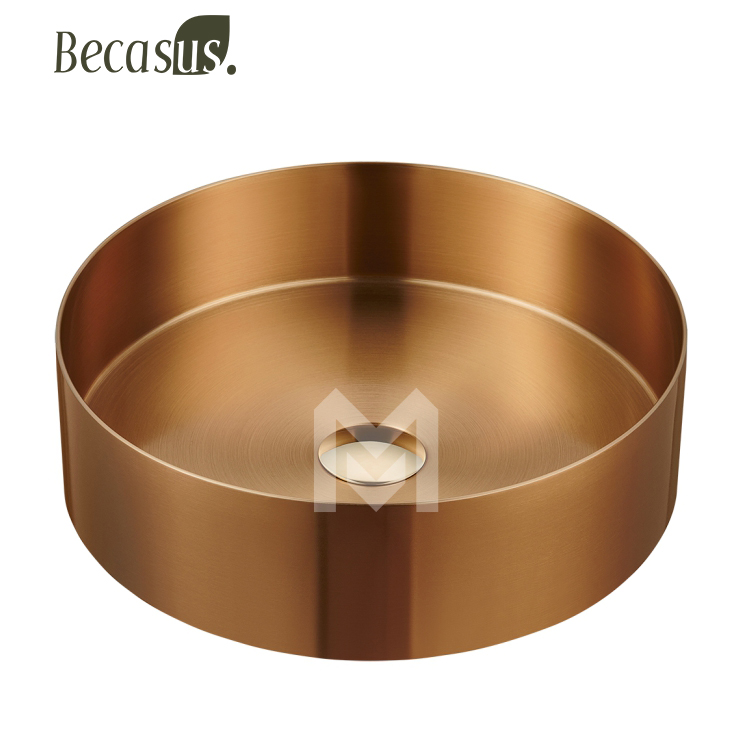
Metal bowls offer an industrial or rustic flair. Coppersmiths hammer these fixtures into unique shapes, while stainless steel provides sleek uniformity.
Pros: Excellent durability. They remain entirely shatter-proof. Copper specifically offers natural antimicrobial properties, killing surface bacteria over time.
Cons: Unpredictable aging. Copper features "living finishes" designed to patina over time. The color will shift, darken, and morph. Maintaining a shiny appearance requires specialized waxes and exhausting polishing routines.
Hardware Compatibility: Solving the Faucet and Drain Puzzle
A beautiful vessel basin fails entirely if paired with the wrong faucet. Hardware compatibility represents the most common stumbling block for DIY renovators. You must select a specific "vessel-filler" faucet to match the elevated rim.
Height remains the first critical metric. The faucet neck must clear the top rim of the sink by at least 1 to 2 inches. If the clearance drops below 1 inch, users cannot easily wash their hands. If the clearance exceeds 3 inches, the water drop distance generates excessive splashing.
Spout reach and angle dictate water behavior inside the bowl. The water stream must hit directly over the drain. Alternatively, it can hit slightly behind the drain. Hitting the sloped side of the basin causes severe splashing. High-pressure water striking a ceramic slope will instantly deflect directly onto the user's shirt.
You must evaluate the installation complexity between wall-mounted and deck-mounted faucets. Wall-mounted fixtures clear the counter space entirely. This makes wiping down the vanity incredibly easy. However, they require behind-the-wall plumbing modifications early in the rough-in phase. You must finalize exact vanity heights and sink dimensions before closing the drywall. Deck-mounted faucets install directly onto the counter. They offer simpler installation but consume valuable surface area behind the bowl.
Drain selection introduces the overflow issue. Because an above counter vessel sink typically sits entirely above the plumbing line, most lack an integrated overflow channel. Standard bathroom sinks feature a small hole near the rim to prevent flooding if someone leaves the water running. Top-mounted bowls rarely include this feature.
You must specify the mandatory use of non-overflow drains. If you install a standard drain assembly featuring an overflow gap, water will leak straight into your vanity cabinet. Building codes require proper drainage matching. For high-use areas, we highly recommend grid drains instead of pop-up styles. Grid drains remain permanently open. They prevent accidental clogging and eliminate flooding risks entirely.
Implementation Risks and Installation Best Practices
Executing a flawless installation requires specific mounting techniques. Flat-bottom ceramic basins generally sit flush directly against the countertop. They do not require extra stabilizing hardware. However, curved-bottom glass or metal bowls present a different challenge. You must clarify when a mounting ring is required. A mounting ring acts as a stabilizing gasket. It cradles the rounded bottom, preventing the bowl from rocking back and forth on the hard stone counter.
Sealing the base forms your primary defense against water damage. Water inevitably drips down the outside of the bowl. Highlight the necessity of a high-quality, mold-resistant clear silicone bead around the entire base. This continuous seal prevents water from seeping underneath the sink. Unsealed gaps trap moisture, leading to severe mold growth and wood rot. This remains a highly common pain point reported in home renovation user forums.
Plumbing cutouts demand precision from your stone fabricator. Warn against oversized counter holes. The hole should only be large enough for the drain tailpiece to pass through. This diameter usually measures 1.5 to 1.75 inches. Oversized holes compromise the structural integrity of the counter. They also reduce the surface area available to support the bowl's weight. A snug fit ensures the basin has adequate structural support and prevents future shifting.
Conclusion
Success with an elevated washroom setup relies entirely on the triad of vanity height, faucet alignment, and material choice. You cannot treat these fixtures like standard drop-in units. They demand rigorous ergonomic planning to prevent daily discomfort. They require exact spout-to-drain alignment to eliminate frustrating splashing. They also demand a clear understanding of the maintenance reality tied to your chosen material.
Your immediate next steps involve measuring your current vanity height. Grab a tape measure and confirm your plumbing rough-in locations. Calculate your target furniture height using the ergonomic equation before shortlisting specific sink models.
Once you define your strict mathematical parameters, direct your attention to finding the perfect aesthetic match. Browse a curated collection or consult a detailed spec sheet checklist to secure a bowl fitting your precise technical requirements.
FAQ
Q: Do vessel sinks splash more than regular sinks?
A: Not inherently. However, they will splash severely if paired with incorrect hardware. Using a faucet featuring incorrect water pressure, improper spout reach, or insufficient drop clearance creates a fountain effect. Shallow basins under 4 inches deep also increase splashing risks. Proper spout-to-drain alignment eliminates this issue completely.
Q: How do you clean the narrow space behind a vessel sink?
A: Prevent the issue during installation by leaving at least 3 to 4 inches of clearance between the bowl and the wall. For existing tight spaces where you cannot fit a sponge, recommend flexible microfiber cleaning wands. These slim tools slide easily into the narrow gap to remove dust and trapped moisture.
Q: Can I put an above counter vessel sink on any vanity?
A: No. Placing one on a standard 36-inch vanity raises the rim to nearly 40 or 42 inches. This height makes washing hands highly uncomfortable for most users. A shorter vanity base, typically measuring 28 to 30 inches tall, is strictly required to maintain proper ergonomics.
Q: Why does my vessel sink drain slowly?
A: The lack of an overflow hole can trap air in the drain line, creating a vacuum effect. Water fights against this trapped air as it tries to exit. Using a vented drain assembly or ensuring proper P-trap venting behind the wall resolves this slow-draining issue.


