


Where To Place Shower Niche?
Views: 0 Author: Site Editor Publish Time: 2026-04-25 Origin: Site


Installing a shower niche is a permanent structural commitment. You cut into your walls expecting a seamless storage solution. Unfortunately, poor placement often leads to pooling water, stubborn mold, or costly plumbing reroutes. Many homeowners mistakenly treat this feature purely as an aesthetic upgrade. We must move past surface-level design to address real architectural constraints. You have to consider stud spacing, local climate realities, and user ergonomics before making the first cut. Ignoring these details guarantees failure. This guide provides a definitive framework for evaluating your wall options and specifying correct dimensions. You will learn how to choose between custom framing, prefabricated boards, or a stainless steel shower niche. Our goal is to help you optimize the total cost of ownership and daily utility for your upcoming bathroom remodel.
Key Takeaways
Optimal Heights: 42"–48" from the floor for standing showers; 25"–30" for tub combos.
The Golden Rule of Placement: Install opposite or adjacent to the showerhead to minimize direct water exposure.
Structural Constraints: Utilize standard 16" on-center stud spacing to avoid expensive reframing.
Climate Warning: Never install a recessed niche on an exterior wall in cold climates without a 4-inch false wall build-out to prevent thermal bridging and mold.
Drainage: A mandatory 1/8-inch downward slope on the bottom sill is non-negotiable to prevent stagnant water.
1. The Evaluation Framework: Selecting the Right Wall for Structural Integrity
Inside vs. Outside Walls (The Thermal Risk)
You must assess thermal risks before selecting a wall. Carving into exterior walls in cold climates destroys your home insulation. This error causes severe thermal bridging. The warm air inside your bathroom meets the freezing exterior wall surface behind the tiles. Condensation forms instantly. Moisture gets trapped inside the wall cavity, breeding toxic black mold. Your expensive shampoos and body washes can also freeze during winter months.
If an outside wall remains your only option, you must build a workaround. Factor in the cost of constructing a 4-inch false wall. This false wall sits directly in front of the existing exterior wall. It provides enough depth for your recess while leaving the original insulation untouched. Keep in mind this solution reduces your total shower floor space.
Plumbing and Utility Avoidance
Contractors call the wall housing your showerhead and mixing valve the "wet wall". You should avoid placing your recess on this wet wall. It contains dense clusters of copper pipes, PEX tubing, and PVC vent stacks. Cutting into this area invites disaster. Moving venting stacks or supply pipes drastically inflates renovation budgets. Relocating a single vent pipe can add hundreds of dollars to your plumbing bill. You should only use the wet wall if you utilize a very shallow prefabricated unit. Even then, risk remains high.
Working with Framing (Scalability & Cost)
Residential framing follows strict rules. Standard wall studs measure 16 inches on-center. This spacing leaves exactly 14.5 inches of empty space between each wooden stud. You can save massive amounts of money by working within these parameters.
Select a recess width between 12 and 14 inches.
Locate the exact center between two existing studs.
Slide the unit perfectly into the existing bay.
This strategy eliminates the labor-intensive need to cut load-bearing studs. You avoid building custom wooden headers to distribute weight. Working with your existing framing keeps your structural integrity intact and keeps labor costs low.
2. Ergonomics and Sizing: Designing for Real-World Utility
Standard Height Guidelines (Features-to-Outcomes)
Design your bathroom around the people using it. Proper placement eliminates awkward bending and dangerous reaching on slippery floors. You must tailor the height to your specific bathing setup.
Standing Showers: Center the unit at chest height. Aim for 42 to 48 inches from the shower floor. This placement keeps bottles accessible without requiring users to bend down.
Tub/Shower Combos: Lower placement is strictly required for bathers. Aim for 25 to 30 inches from the floor. You can also position it just a few inches above the tub lip. This allows you to reach soap while soaking in the bath.
Accessibility / Aging-in-Place: Wheelchair users require lower heights. Target 33 to 36 inches from the floor. Consider adding waterproof LED strip lighting inside the recess. This lighting improves safety and visibility for older users.
Volume and Depth Sizing
Most interior walls utilize 2x4 lumber framing. This standard framing limits your recess depth to exactly 3.5 inches. You cannot force a deeper box into a standard wall without building out the drywall. This 3.5-inch depth comfortably holds standard soap bars and regular shampoo bottles. However, you must carefully plan your vertical clearance. Ensure the vertical height reaches a minimum of 12 inches. Bulk-sized pump bottles from warehouse clubs demand significant vertical space. A short opening renders the space useless for modern households.
3. Material Trade-Offs: Custom Tile vs. Prefab vs. Stainless Steel Shower Niche
Custom Framed & Tiled Niches
Custom framed units offer traditional appeal. Installers build a box out of wood, cover it with cement board, and apply liquid waterproofing.
Pros: You gain infinite design flexibility. You can match the surrounding wall tile for an invisible integration.
Cons: These carry high installation labor costs. They rely heavily on vulnerable waterproofing joints in the corners. They also feature difficult-to-clean grout lines. Grout is porous and traps sticky soap scum, demanding constant scrubbing.
Prefab Foam Board Niches (e.g., Wedi, Schluter)
Prefabricated foam boards revolutionized modern waterproofing. Manufacturers mold these boxes from high-density foam coated in waterproof membranes.
Pros: They provide a guaranteed waterproof envelope. The bottoms come pre-sloped from the factory to shed water. They drastically reduce labor time for your tile setter.
Cons: You still have to apply thinset and tile over the unit. You cannot escape the maintenance burden of dirty grout lines.
Finished Drop-In Units (Stainless Steel & Solid Surface)
Finished units bypass the tiling process entirely. You tile the wall first, leave a precise hole, and drop the finished box into place.
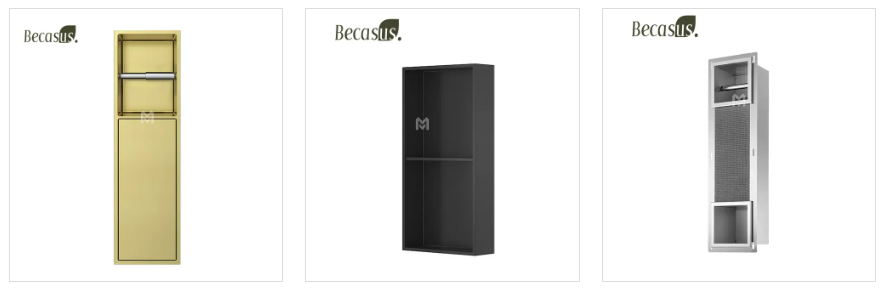
Pros: Integrating a stainless steel shower niche eliminates grout entirely. It is highly sanitary and resists rust. The sleek surface offers the lowest long-term maintenance cost. Installation is plug-and-play. You simply secure it to the wall with a high-grade silicone seal.
Cons: You must accept fixed dimensions. It introduces a distinct metallic contrast into the design. You must carefully align this metal finish with your existing showerheads and mixing valves.
Material Comparison Chart
Material Type | Installation Speed | Waterproofing Risk | Maintenance Level |
|---|---|---|---|
Custom Framed & Tiled | Slow (High Labor) | High (Relies on installer skill) | High (Scrubbing grout lines) |
Prefab Foam Board | Medium | Low (Factory sealed) | High (Still requires grout) |
Stainless Steel Drop-In | Fast (Plug-and-play) | Zero (Solid piece construction) | Very Low (Wipe clean) |
4. Critical Implementation Risks and Tile Planning
The Pooling Water Risk (Slope Compliance)
Water destroys homes when left unchecked. Any tiled horizontal surface inside a wet zone must shed water quickly. Your bottom sill must feature a 1/8-inch fall. This slight downward slope directs water back toward the main shower pan. Flat sills are the leading cause of structural failure. Water sits on a flat sill, slowly eating through the grout. It eventually penetrates the waterproofing layer and rots the wood framing below. Mold thrives in these stagnant water pools. You must verify this slope with a bubble level before the mortar cures.
Tile Layout and "Sliver" Avoidance
Do not cut your drywall until you map your tile layout. You must calculate exactly where the tile rows will fall on your wall. The opening should align perfectly with full tile courses at both the top and bottom. Failing to plan results in awkward slivers. Slivers are tiny, fragmented pieces of tile measuring less than an inch wide. They look unprofessional and ruin the aesthetic flow. Grout also struggles to bond effectively in tight sliver gaps, leading to premature cracking.
Finishing the Edges
You must address how the wall tile transitions into the recessed box. Traditional bullnose tiles are increasingly dated. They look bulky and interrupt modern, clean lines. Instead, use sleek metal profile trims. Brands manufacture these L-shaped or square-edged metal strips specifically for tile edges. They provide a durable, minimalist transition from the main wall tile into the interior. These profiles protect the exposed, unglazed edges of your porcelain tiles from chipping.
5. When a Niche Fails: Evaluating High-ROI Alternatives
The "Ledge" (Half-Wall Concept)
Sometimes your framing constraints make recessed boxes impossible. The "ledge" serves as a highly functional alternative. This design replaces the traditional recess by building the lower half of the shower wall out. You frame a false wall extending 4 to 6 inches outward, stopping at chest height.
Why it works: It creates a continuous, horizontal surface capping the half-wall. You cap this ledge with a single, solid piece of quartz or marble. This creates a massive, grout-free storage shelf spanning the entire wall length.
Trade-off: It consumes valuable floor space. You should avoid this in small enclosures. However, it works perfectly in spacious tub-to-shower conversions.
Non-Invasive Hardware (Teak Benches & Corner Glass Shelves)
Older homes hide expensive surprises behind the drywall. You might open a wall and find unpredictable framing, out-of-plumb studs, or hidden electrical wires. In these scenarios, pivoting to non-invasive hardware saves your budget.
Evaluation: Surface-mounted glass shelves utilize corner space effectively. Waterproof teak benches sit directly on the floor. These alternatives offer massive storage utility. They carry zero structural risk and zero waterproofing liability. You simply drill a few anchors through the finished tile. For strict budgets, high-quality hardware delivers better ROI than moving pipes or rebuilding walls.
Conclusion
Determine your framing constraints first: Use a stud finder to map your 16-inch stud bays and identify exterior walls before finalizing your design.
Measure your products: Measure the tallest bulk shampoo bottle you currently buy to ensure your planned vertical clearance exceeds 12 inches.
Prioritize grout-free solutions: Evaluate your tolerance for scrubbing moldy grout. A grout-free material like stainless steel drastically reduces weekly cleaning tasks.
Map the wet zone: Mark an interior wall located opposite or adjacent to your showerhead to minimize direct water spray.
Finalize materials before demolition: Purchase your selected storage units, metal trims, and tiles before cutting into the drywall to guarantee perfect alignment.
FAQ
Q: Should a shower niche be on the same wall as the showerhead?
A: No, it should be placed on the opposite or adjacent wall. Installing it directly under the showerhead exposes your products to constant, direct water spray. This positioning washes away your soap and increases the risk of water penetrating your grout lines and waterproofing membranes.
Q: How deep is a standard shower niche?
A: Standard depth is exactly 3.5 inches. This depth fits perfectly inside conventional 2x4 wooden framing. If you want a deeper shelf, you must frame a custom false wall to build out the depth, which reduces your overall shower floor footprint.
Q: Can I install a shower niche horizontally?
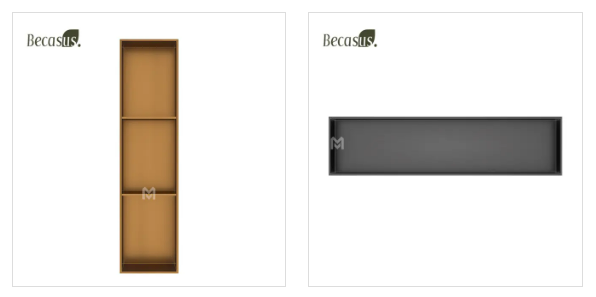
A: Yes, linear horizontal niches look incredibly modern and provide expansive storage. They are excellent for wider walls, particularly in long tub-to-shower conversions. However, horizontal designs require cutting multiple load-bearing studs and installing a structural header above the opening. This significantly increases your labor costs.
Q: Are tiled shower niches hard to keep clean?
A: Yes, they trap soap scum quickly if you use small mosaic tiles with heavy grout lines. Upgrading to large-format tiles, solid slab bottoms, or a groutless stainless steel unit significantly reduces maintenance and prevents mold growth.


