


How High Should A Shower Niche Be?
Views: 0 Author: Site Editor Publish Time: 2026-04-23 Origin: Site


Pinpointing the correct height for a shower niche is a permanent structural decision, not a mere design afterthought. Once contractors cut into the wall framing, your placement becomes securely locked in place. Miscalculating this height often leads to compromised waterproofing layers, awkward tile cuts known as slivers, and daily ergonomic frustration. A successfully executed storage cavity perfectly balances daily usability against construction realities like stud placement, tile symmetry, and optimal drainage.
This guide breaks down the exact measurements you need for a flawless installation. We examine hidden structural limitations, evaluate material frameworks, and detail professional planning methods. You will learn how to confidently specify placement before your contractor makes the very first cut. We also look closely at tile mathematics and why specific dimensions matter heavily for oversized shampoo bottles. By the end, you will have a bulletproof strategy for your next bathroom renovation.
Key Takeaways
Standard Baseline Height: The industry standard places the center of the niche between 42 and 48 inches (approx. 1200 mm) from the floor, aligning with chest or eye level for most adults.
Ergonomics over Averages: Factor in oversized pump bottles; require a minimum vertical clearance of 12 inches to allow for downward pumping motion without hand-cramping.
Tile Math Dictates Final Placement: Never frame the niche cavity based on stud location alone. Final height must align perfectly with horizontal and vertical grout lines to avoid asymmetrical tile fragmentation.
Structural Constraints: Avoid exterior walls to prevent thermal weak spots and condensation. Ensure a 1/8-inch downward slope on the bottom sill for proper water run-off.
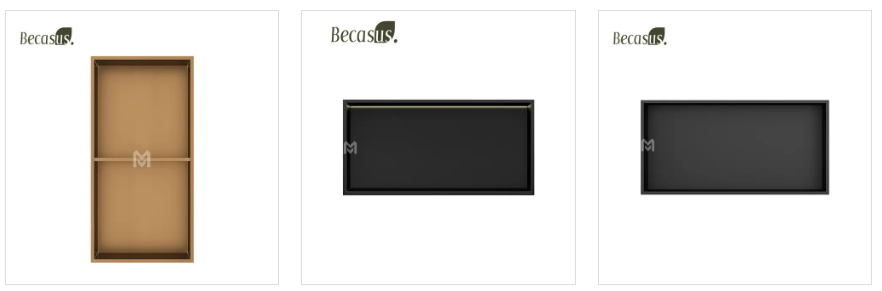
The Ergonomic Evaluation: User-Centric Height and Depth
Personal comfort should drive your initial placement decisions. Industry averages offer a helpful baseline, but your actual physical needs matter most. You must evaluate who uses the space daily to prevent future straining or awkward bending.
We rely on the "Belly-Button to Chest" heuristic for primary placement. Evaluate the heights of the primary users in your household. The bottom ledge should generally sit right at the user's navel. The top edge should never exceed shoulder height. We cap this maximum height at roughly 60 inches from the shower floor. Placing items higher creates visual blind spots. It also makes routine cleaning unnecessarily difficult.
Shower-tub combinations require a completely different approach. You use a tub while sitting, so the standard chest-height measurement fails. For these dual-purpose spaces, evaluate a secondary installation standard. Place the cavity 25 to 30 inches from the floor. This optimizes reachability for someone taking a bath while remaining somewhat accessible during a quick rinse.
Next, you must perform the "Oversized Bottle" capacity test. People often underestimate their storage requirements. A two-liter family-sized shampoo bottle requires significant space. You must standardize the interior height to an absolute minimum of 12 inches. This vertical clearance allows you to physically press the pump downward. Without this space, your hand will cramp against the top edge.
Finally, consider secondary storage needs based on specific habits.
Foot Niche Supplement: If you evaluate a stall without a built-in bench, consider shaving ergonomics.
Micro-Cavity Placement: Install a secondary micro-niche roughly 12 inches from the floor.
Safety Benefit: This provides a secure foothold. It assists with safely shaving legs without slipping.
Structural Realities and Implementation Risks
Design aspirations often clash with hard physical boundaries inside your walls. You must respect the hidden skeleton of your home. Ignoring structural constraints invites disastrous moisture problems and weakened framing.
Never place a storage cavity on an exterior wall if you can possibly avoid it. This is a severe liability. Standard wall cavities hold crucial insulation. Carving out space for storage displaces this protective barrier. It creates a thermal weak spot in your home's envelope. Cold outside air meets warm shower steam at this exact location. This temperature clash guarantees moisture condensation inside the wall. Eventual mold growth and structural decay will inevitably follow.
You also face strict physical framing limitations. Standard residential wall cavities maximize at 3.5 inches of depth. Width is equally restricted. Builders space standard wall studs 16 inches on center. Once you account for the thickness of the wood itself, this yields roughly 14.5 inches of usable interior width. You must fit your storage within these rigid physical boundaries.
You must actively manage contractor risks during the framing stage. Some contractors prioritize easy visual centering over structural safety. They might suggest cutting a load-bearing stud simply to align the cavity with your showerhead. You must explicitly forbid this practice.
Prioritize Integrity: Never compromise structural load paths for minor aesthetic symmetry.
Accept Asymmetry: A slightly off-center cavity functions perfectly well and keeps your roof supported.
Shift the Layout: Adjust your tile design to camouflage any slight offset rather than chopping structural wood.
The "Tile Math" Methodology: Aligning Height with Aesthetics
The most common implementation failure happens long before the first tile goes up. Contractors often cut the wall opening before you select your surface materials. This grid-first planning error guarantees a visually messy final product. You must backward-calculate the exact height from the floor based on the physical dimensions of your chosen wall tile.
We use a process called "Tile Math" to avoid ugly slivers. Slivers are tiny, fragmented cuts of tile inserted to fill awkward gaps. They ruin the luxury aesthetic of a premium bathroom. To apply Tile Math, divide your total wall height by your tile width. You must factor in the exact width of your planned grout joints. The bottom and top sills must land precisely on horizontal grout lines. This mathematical alignment ensures only whole, uncut tiles frame the opening.
Here is a basic reference table demonstrating how tile size impacts optimal sill placement heights. We calculate these examples assuming a standard 1/8-inch horizontal grout line starting from a perfectly level shower pan.
Tile Height | Grout Size | Optimal Bottom Sill Height (Approx.) | Optimal Top Sill Height (Approx.) |
|---|---|---|---|
4 inches (Subway) | 1/8 inch | 41.25 inches (after 10 rows) | 53.62 inches (after 13 rows) |
12 inches (Large Format) | 1/8 inch | 36.37 inches (after 3 rows) | 48.50 inches (after 4 rows) |
24 inches (Slab Tile) | 1/16 inch | 48.12 inches (after 2 rows) | 72.18 inches (after 3 rows) |
We highly recommend utilizing a strategic delay strategy to guarantee perfection. Advise your framing contractors to delay installing the final horizontal blocking. They should wait until the tile setter physically lays the bottom rows on the wall. This pause ensures the opening aligns flawlessly with real-world grout lines, correcting any minor leveling errors.
Material Shortlisting: Evaluating TCO and Waterproofing Reliability
Selecting the right underlying material dictates your total cost of ownership (TCO). Some methods look beautiful initially but demand intense maintenance over a decade. You must evaluate the long-term risks of leakage and hard-water degradation.
Traditional custom-framed niches carry a high maintenance TCO. They require meticulous manual waterproofing steps. Installers must paint continuous liquid membranes or apply taped sheet membranes perfectly. Consequently, custom cavities remain the number one failure point for shower leaks. Custom enclosures often utilize floating glass shelves. These glass elements exhibit severe hard-water staining quickly. If you insist on building a custom enclosure, skip the glass. Evaluate 2cm thick quartz or solid surface offcuts for the sill and shelves instead. They wipe clean easily and resist scuffing.
Preformed foam substrates offer a moderate implementation risk. These factory-shaped foam boxes drop the risk of internal leakages compared to manual drywall framing. They arrive pre-waterproofed. However, they still require highly skilled tile layout. You also commit to decades of cleaning intersecting grout lines inside the tight corners.
For the lowest possible TCO and risk, we strongly recommend a stainless steel shower niche. A fully finished, drop-in metal unit removes the need for intricate interior tiling altogether. You slide it into the opening, seal the flange, and tile up to the metal edge.
Below is a comparative chart outlining the key ROI drivers across these three material strategies.
Material Strategy | Installation Labor Cost | Leak Risk Potential | Long-Term Maintenance (TCO) |
|---|---|---|---|
Custom Tiled Drywall | High (Requires specialized taping and membrane painting) | High (Relies purely on human perfection) | High (Grout scrubbing, glass shelf wiping) |
Preformed Foam Box | Medium (Eliminates membrane painting, needs tile cuts) | Low (Seamless factory corners) | High (Still requires extensive grout maintenance) |
Stainless Steel Insert | Low (Simple drop-in and silicone seal) | Zero (Solid welded metal construction) | Zero (No grout, built-in drainage slope, wipes clean) |
As the chart illustrates, prefabricated metal options eliminate specialized waterproofing labor entirely. They guarantee the mandatory 1/8-inch drainage slope by design. They completely eradicate grout-line maintenance and hard-water degradation, locking in your investment.
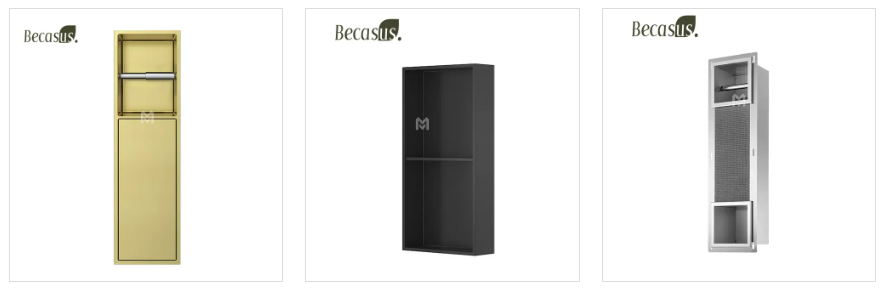
Placement Strategy: Display vs. Concealment
You must decide if your storage serves as a decorative focal point or a purely utilitarian feature. This visual impact evaluation changes which wall you choose. A poorly placed cavity ruins the minimalist aesthetic of a modern bathroom.
If you purchase matching, luxury dispenser bottles, a back-wall placement works beautifully. You can add waterproof LED lighting to highlight the space. However, most families store brightly colored, mismatched commercial bottles. In this common scenario, we advocate for the concealment approach. Specify your installation on a sidewall or a half-wall partition. This keeps the clutter out of the direct line of sight when someone opens the bathroom door. You maintain a clean visual impression while preserving daily function.
Water flow considerations dictate the final location just as much as aesthetics do. Regardless of the wall you choose, place the cavity outside the direct splash zone. You do not want the primary showerhead spraying directly into your storage area. Direct water bombardment causes water accumulation. It dramatically accelerates soap scum buildup. It also melts bar soap prematurely. Place your items where they receive mist, but avoid the main pressurized stream.
Conclusion
Determining shower niche height remains a three-dimensional decision. It must satisfy human ergonomics, align flawlessly with mathematical tile grids, and obey structural wall limits. Taking shortcuts on any of these three pillars results in permanent frustration.
Your next-step action involves strict preparation before any demolition begins. Finalize your exact tile dimensions to calculate your grid. Purchase your tallest anticipated shampoo bottle to perform a physical mock-up in the space. Finally, decide between a custom-tiled cavity or a leak-proof pre-fabricated stainless steel insert. This early material choice locks in your long-term maintenance costs and ensures a watertight finish.
FAQ
Q: What is the standard size for a shower niche?
A: Standard functional sizes are 12 to 16 inches wide to fit naturally between standard wall studs. They generally range from 12 to 24 inches high. The interior cavity depth is restricted to roughly 3.5 inches due to standard framing lumber.
Q: Does a shower niche need a slope?
A: Yes. A mandatory 1/8-inch downward pitch toward the shower pan is absolutely required. This slight slope prevents standing water from pooling. Proper drainage stops subsequent mold growth and protects the underlying waterproofing membrane from constant saturation.
Q: Can I stack two shower niches on top of each other?
A: Yes. A dual-niche configuration efficiently separates tall pump bottles from smaller items like bar soap or razors. You can stack two separate boxes or add a continuous shelf inside a taller 24-inch cavity without widening the stud footprint.


